Where to Inject Peptides in the Stomach: What Research Protocols Describe
By Marcus Reid — Sun Jun 21 2026
"Where to inject peptides in the stomach" is one of the most-searched peptide questions. This guide explains how subcutaneous administration is described in research literature — strictly for educational context.
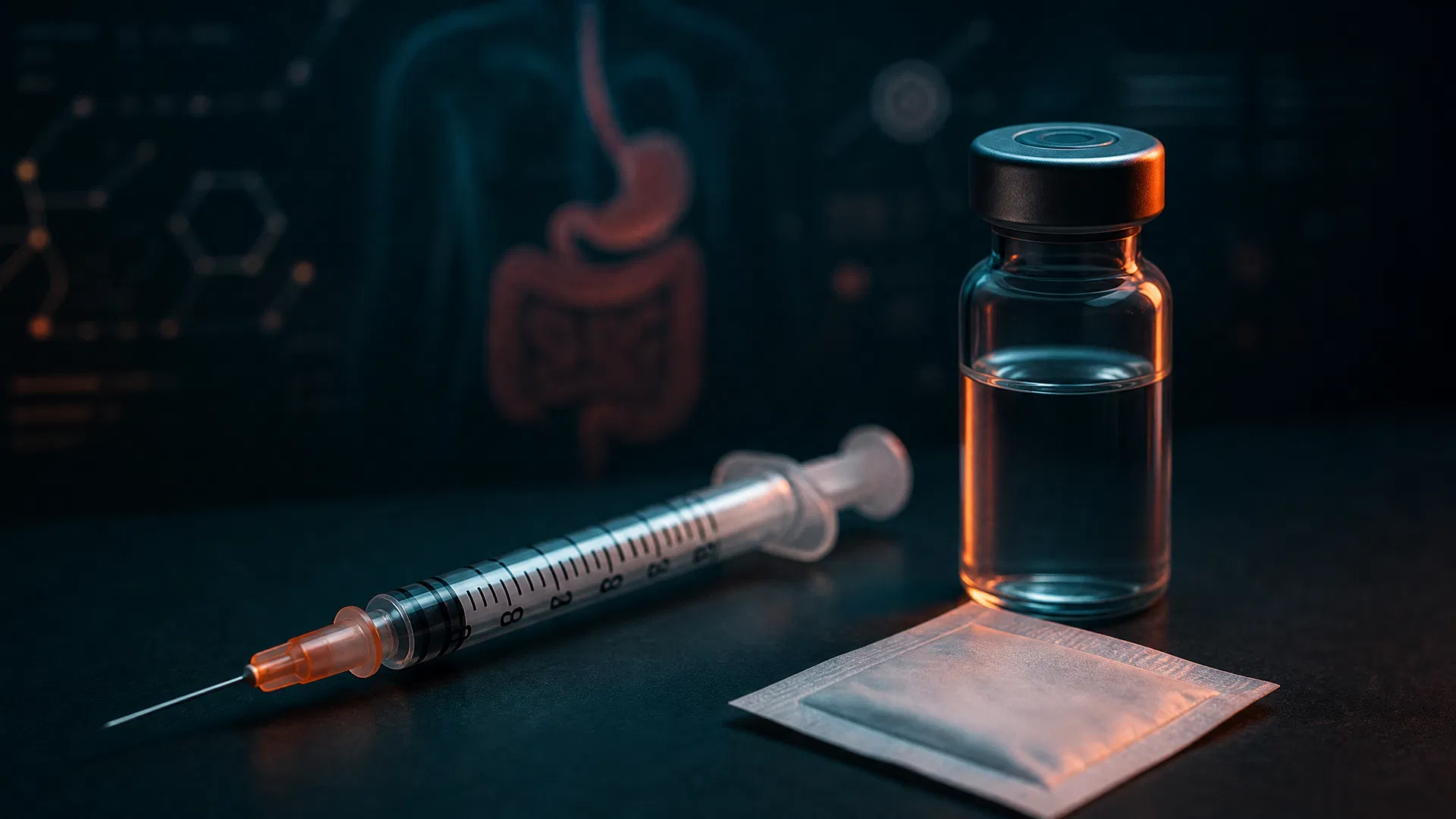
"Where to inject peptides in the stomach" is one of the highest-volume questions in the entire peptide space, and it deserves a careful, honest answer. This article is written strictly for research and educational context. The peptides discussed are research-use-only compounds, not approved for human consumption, and nothing here is medical advice or an instruction to administer anything to a person. What we can do is explain how the research literature describes subcutaneous administration in study models, and why the surrounding details matter more than most people realize.
Why the abdominal area comes up
In research protocols that involve subcutaneous administration, the abdominal region is frequently referenced for a practical reason: it tends to have an accessible layer of subcutaneous tissue (the fat layer just beneath the skin) that sits above the muscle. Subcutaneous means "under the skin" — not into muscle and not into a vein. In study documentation, this region is described because it is consistent and easy to standardize across a protocol.
The often-cited guidance in the literature is to avoid the immediate area around the navel and to work within the broader abdominal region, alternating locations rather than using the same spot repeatedly. Rotation matters in research models because repeatedly using one site can change the local tissue and introduce variability into results.
The detail people skip: sterility
The question "where" tends to crowd out the more important question: "under what conditions." In any credible protocol, sterile technique is foundational. That means the reconstituted solution is handled cleanly, the surface is prepared with an alcohol swab, and sterile, single-use equipment is standard. Bacteriostatic water — not tap or distilled water — is what research peptides are reconstituted with, precisely because it contains an agent that inhibits bacterial growth.
A protocol that gets the location right but the sterility wrong is a flawed protocol. This is the part that separates careful documentation from a forum shortcut.
What the research literature emphasizes
| Element | Why research protocols document it | | --- | --- | | Tissue layer | Subcutaneous vs. intramuscular changes the model entirely | | Site rotation | Prevents local tissue changes that add variability | | Sterile technique | Controls for contamination as a confounding variable | | Reconstitution medium | Bacteriostatic water is standard for stability | | Concentration | Determines the volume associated with a given quantity |
Notice that "where" is only one row in that table. The other rows are what actually determine whether a procedure is reproducible.
Verification comes before technique
Here is the part that connects back to everything else on PeptideTally: none of this matters if the vial does not contain what it claims. Before any protocol detail is relevant, the compound has to be verified. A batch-specific [certificate of analysis](https://en.wikipedia.org/wiki/Certificate_of_analysis) from a named third-party lab — confirming purity by [HPLC](https://en.wikipedia.org/wiki/High-performance_liquid_chromatography) and identity by mass spectrometry — is the prerequisite. A contaminated or mislabeled compound makes the most careful technique meaningless.
This is exactly why vendor selection is upstream of every other question. You can compare which suppliers publish verifiable, batch-specific COAs in our [vendor comparison table](/).
Why we will not give you a step-by-step
It would be easy to write a numbered list, but it would be irresponsible. These are research compounds, the search intent often comes from people considering self-administration, and we are not going to pretend a blog post is a substitute for proper research credentials and oversight. What we can responsibly say is: the literature describes subcutaneous administration in the abdominal region, away from the navel, with site rotation and strict sterile technique — and it always assumes a verified compound.
The honest bottom line
If you are reading research methods that reference the abdomen for subcutaneous administration, the location is only one variable among several, and it is not the most important one. Sterility, the correct tissue layer, reconstitution, concentration, and — above all — a verified compound determine whether anything downstream is sound.
Start where every responsible research workflow starts: with a supplier whose purity you can verify. Take our [vendor matching quiz](/quiz), or review the [full comparison table](/) to see who publishes third-party COAs.
PeptideTally Data Context from our research: reconstitution and handling errors are a more common source of failed research outcomes than the compound itself. Of the 276 vendors we score , the 9 we rate 4.5/5 or higher all ship with batch-specific COAs and clear reconstitution guidance — while the 37 rated below 3.0 frequently ship without either. Documentation quality, not technique alone, is what our data associates with reliable results.
Frequently asked questions
Why is the abdomen referenced for subcutaneous administration?
In research protocols, the abdominal region is referenced because it typically has an accessible subcutaneous tissue layer that can be standardized across a study. Guidance generally describes avoiding the immediate area around the navel and rotating sites.
What does subcutaneous mean?
Subcutaneous means under the skin, into the fat layer above the muscle — not into muscle and not into a vein.
Why does sterile technique matter?
In research, contamination is a confounding variable. Sterile handling, alcohol preparation, single-use equipment and bacteriostatic water for reconstitution are standard in credible protocols.
Are these compounds approved for human injection?
No. They are research-use-only compounds, not approved for human consumption, and this article is educational context only — not medical advice.
References
About the author
Marcus Reid: Marcus Reid spent a decade in software engineering before a 2021 bloodwork panel sent him deep into the research on GLP-1 receptor agonists and peptide pharmacology. He reads the clinical literature, tracks his own biomarkers, and writes about what the data actually says — in plain language, with every claim linked to its source. He is not a doctor; nothing here is medical advice. He is a researcher who writes the publication he wished had existed when he started.