TB-500 vs Thymosin Beta-4: The Naming Problem I See in Vendor Catalogs
By Marcus Reid — Fri Sep 04 2026
TB-500 vs Thymosin Beta-4: The Naming Problem I See in Vendor Catalogs — my honest, first-person take, backed by data from the 287 peptide vendors I track. Research use only.
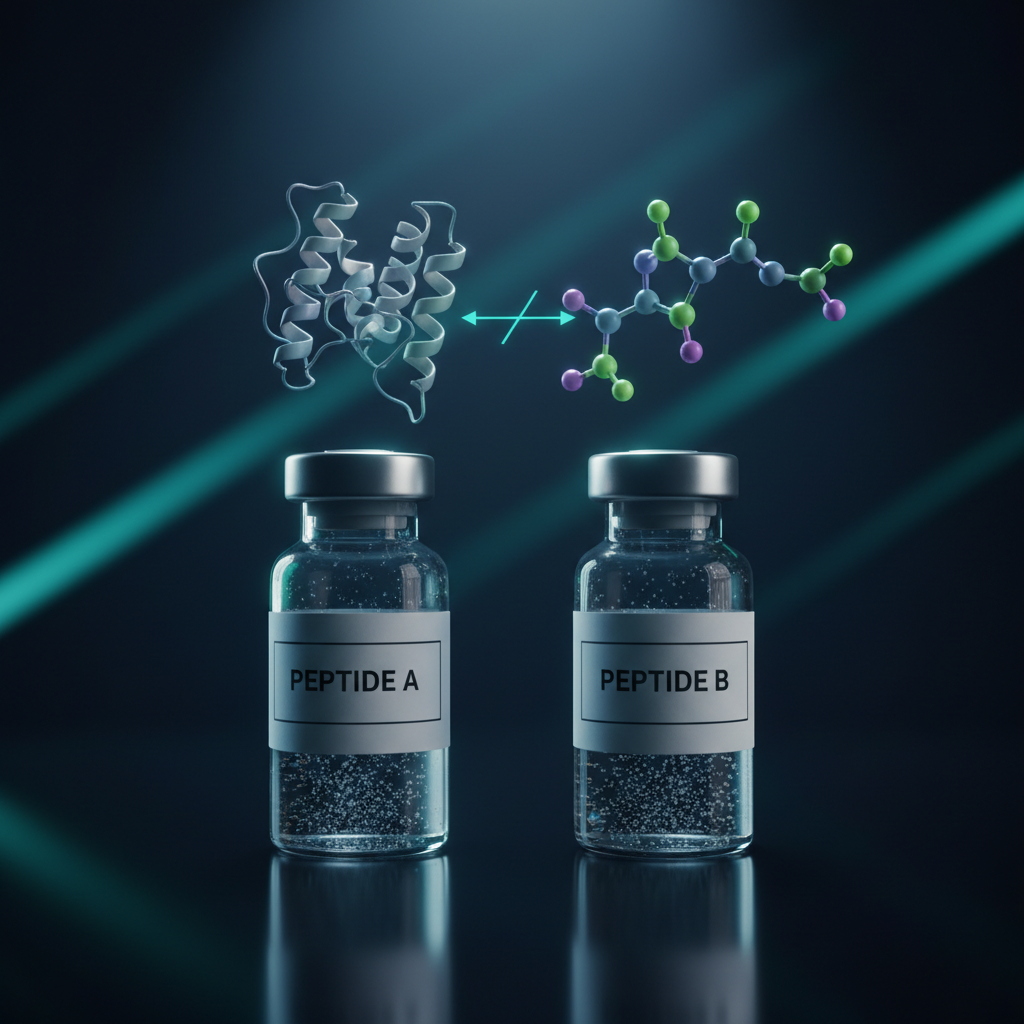
## A short admission up front I've spent more hours than I want to admit clicking through vendor catalogs trying to figure out whether "TB-500" is the same thing as "thymosin beta‑4" — and the answer I keep finding is: it depends on who you're buying from. I want to walk you through the naming problems I see, why they matter for research reproducibility, and the practical checklist I use before I trust a catalog entry.
## Why this naming problem actually matters Names are how we trace a reagent back to sequence, purity data, and analytical proof. When a vendor calls something "TB‑500" on one page and "Thymosin beta‑4 (fragment)" on another, that confusion ripples into experimental records, methods sections, and repeatability. I don't care about marketing language; I care if the peptide sequence and supporting QC align with what your experiment needs.
In plain terms: if the catalog name doesn't map to an explicit amino‑acid sequence, mass spec data, or a named COA, you can't reliably say two products are equivalent — even if both vendors use the same shorthand.
## How vendors typically use the two names From what I see across catalogs, there are three common patterns:
- “TB‑500” used as shorthand for a marketed synthetic peptide related to thymosin beta‑4, often without sequence details listed. - “Thymosin beta‑4” used to describe the full 43‑amino‑acid native peptide, sometimes with explicit sequence and sometimes not. - Hybrid listings where the vendor either conflates the full protein with a fragment, or uses “TB‑500” as a brand name for their proprietary peptide.
I can't stress this enough: a name alone is rarely sufficient. I need sequence + mass spec + a COA to feel secure.
## The Reid 4‑Step Vendor Check (my go‑to framework) I created a quick checklist I run through before I treat a catalog entry as usable data. I call it the Reid 4‑Step Vendor Check.
1. Sequence first — confirm an explicit amino‑acid sequence is listed. If there’s only a marketing name, my red flag goes up. 2. COA source — look for a named third‑party lab on the COA. Anonymous or in‑house only COAs are lower trust. 3. Analytical proof — mass spec (MS) chromatogram and HPLC trace must be present and match the claimed mass/purity. 4. Batch traceability — catalog lot numbers, manufacturing dates, and storage instructions. If batches are opaque, the product is a repeatability risk.
I use those steps every time I catalog a peptide in my notes. If a vendor fails step 1 or 2, I usually stop there.
## What my vendor database tells me (short, important numbers) I track 287 vendor profiles as part of my ongoing vendor audit. Of those:
- Only 23% (65 of 287) publish named‑lab COAs — meaning the majority leave critical external verification out of public view. - Only one vendor currently has a published editorial assessment in my tracker; that available assessment averages 4.70/5. - In my assessed set, a single vendor clears my 4.5/5 threshold for a “recommended” label.
Those numbers explain why I click so many pages. Good COAs and transparent analytics are uncommon. If you want to find vendors that publish robust data, start by filtering for named‑lab COAs on /vendors and cross‑referencing peptides on /peptides-list.
## A common consensus — and why I push back Consensus advice you’ll hear: “Always choose the full‑length thymosin beta‑4 if you can — fragments like TB‑500 are inconsistent and less biologically relevant.” I push back with a practical nuance: fragments can be legitimate, useful reagents in controlled experiments — provided the vendor documents the exact fragment sequence and its analytical proof.
Why I say this: I’ve seen multiple well‑documented fragment peptides that were the right tool for actin‑binding or cell‑motility assays because their sequence matched the experimental design. The problem isn’t fragments per se; the problem is poor documentation. My priority is traceability, not an a priori ban on fragments.
## Practical, catalog‑level red flags I watch for - “TB‑500” listed with stock photos, no sequence, and a generic purity claim like “>98%” — treat as not vetted. - Listings that switch between names on different pages (e.g., product page says “TB‑500” but the technical sheet calls it “Thymosin beta‑4 full length”) — ask for sequence. - COAs dated years ago or with no lot number — that COA is not batch‑specific. - Vendors that claim “native protein” but provide no recombinant expression or synthesis data — demand method details.
If a vendor provides a MS peak and HPLC trace, take screenshots and archive them with the lot number. I also run the mass through my calculations (I use my quick mass checks and sometimes /peptide-calculator for sanity checks) to ensure the reported m/z matches the declared sequence.
## How to document it in your methods section When I write methods I include: vendor name, catalog number, peptide name as listed, explicit amino‑acid sequence, lot number, and which COA I used (date and named lab if present). That way reviewers or labmates can trace what “TB‑500” meant in my study. If the catalog lacked a named‑lab COA, I say so; transparency matters more than comfort.
## When to walk away If a peptide listing fails the Reid 4‑Step Vendor Check and the vendor won’t provide sequence plus batch MS/COA upon request, I don’t buy it. I’ve wasted time and a few experiments learning that opaque vendors cost more in the long run.
If you want a fast cross‑check, I recommend comparing the product across at least two vendors on /vendors and confirming the sequence and analytical files on /peptides-list before you commit.
## Final, blunt piece of advice from someone who’s done the clicking Name ambiguity is mostly a documentation problem, not a mystical science problem. Treat “TB‑500” as only a starting label. Push for sequence, batch MS, and a named COA. If those aren’t public, ask for them and archive the reply. Your lab notebook is only as good as your ability to map a name back to an analytic fingerprint.
*This article is for educational and research‑use‑only purposes. I am not a medical professional; this is not medical advice and nothing here should be taken as guidance for human use.*
References
About the author
Marcus Reid: Marcus Reid spent a decade in software engineering before going deep into peptide research, product documentation, and the clinical literature. He writes about what the data and the paperwork actually say. He is not a doctor; PeptideTally content is educational and does not constitute medical advice.