How I Compare Recovery-Peptide COAs Across Different Vendors
By Marcus Reid — Sat Sep 12 2026
How I Compare Recovery-Peptide COAs Across Different Vendors — my honest, first-person take, backed by data from the 287 peptide vendors I track. Research use only.
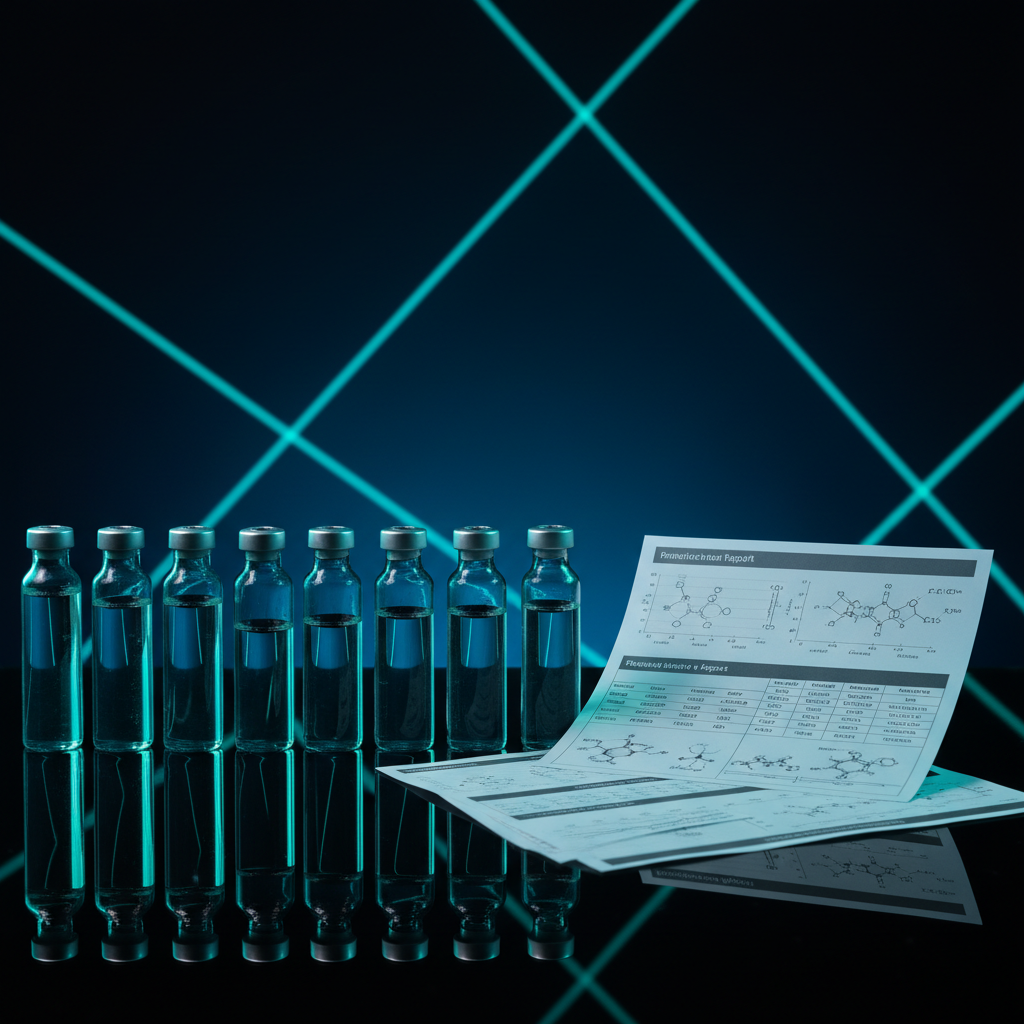
How I Compare Recovery-Peptide COAs Across Different Vendors ===========================================================
I started paying attention to recovery-peptide COAs because vendor marketing sounded great but the paperwork often didn’t match what arrived in the lab. After years of checking chromatograms, emailing labs, and learning which claims are meaningful, I’ve developed a practical way to separate solid evidence from clever marketing.
Why COAs matter more than product images ----------------------------------------
A pretty product photo tells you nothing about identity, purity, or what lab actually verified the batch. I track 287 vendor profiles in my database, and a big red flag I use immediately is provenance: only 23% (65 of 287) publish named-lab COAs. That means most vendors either publish in-house reports or give minimal paperwork — and those are the ones I interrogate first. In the tiny group that has formal editorial assessments (one vendor currently), the average assessed rating is 4.70/5; one assessed vendor clears a 4.5/5 rating. Those assessments are useful, but they’re rare — so I built a repeatable process I can apply across the rest.
My four-step RADAR checklist ---------------------------
I use a short, memorable framework I call the RADAR Checklist (five concrete steps):
- Report provenance — Is the COA issued by a named third-party lab? Is the lab contactable? Look for lot number, date, and a lab name you can verify. - Analytical evidence — Does the COA include HPLC chromatogram (with integration), mass spec (expected mass), and method description? If one of these is missing, flag it. - Discrepancies check — Do the label claim and the COA match (peptide name, sequence/fragment, assay result)? Watch for swapped lot numbers or ambiguous naming like “BPC” without sequence. - Assay vs Purity — Does the COA clearly state assay method and units (e.g., % purity by area vs % by weight)? Area% alone can be misleading unless method is shown. - Reach-out verification — Can the vendor provide raw data (original chromatogram, MS spectrum) or a named-lab contact? If they stall, assume lower confidence.
I run RADAR on every COA I accept for the bench — and I recommend you do the same.
What I actually look for on a recovery peptide COA --------------------------------------------------
- Clear identity: peptide name and sequence or fragment listed exactly. For recovery peptides, ambiguity (“BPC” vs “BPC-157”) is common — I insist on sequence. - Lot number and date: cross-check these with any COA and packaging. Mismatched lots are a common sign the COA was reused. - Named lab vs in-house: named third-party labs that publish their own certificates are worth a premium. Remember my database: only 65 of 287 vendors publish named-lab COAs. - HPLC chromatogram: look at retention time, a single major peak, and integration value. If the chromatogram lacks axes labels or method information, it’s nearly useless. - Mass spec: for many peptides MS is decisive — but read the next section because MS isn’t a magic cure for everything. - Purity vs assay: a COA should say what “purity” means. Is it % area under the HPLC curve? Is there a separate assay (content by weight)? - Impurities and related substances: does the COA report known degradation products or provide a limit for unknowns? - Stability/expiry and storage conditions: short peptides can degrade; the COA should say how long the lot is valid and under what conditions.
A short comparison table I use when talking through vendor COAs
| COA type | Typical contents | My confidence level | |---|---:|---:| | Named third‑party COA | HPLC, MS, lab name, lot, date | High | | Vendor in‑house COA | HPLC image, numeric purity | Medium | | Minimal COA | Single number, no data | Low |
Notes on bpc-157 coa comparison -------------------------------
When I do a bpc-157 COA comparison I look for explicit sequence labeling and MS where possible. BPC-157 is small and sometimes vendors use shorthand; that shorthand hides critical details. In my experience, a COA that only lists “BPC-157, 99%” without chromatogram or lot date is not sufficient. I prioritize COAs that show both HPLC chromatogram and an MS peak at the expected mass (and a named lab if available). If a vendor can’t show a chromatogram with axes and a method, I mark them down in my internal notes.
TB-500 testing — what’s different -------------------------------
TB-500 (a fragment of thymosin beta‑4) brings a couple of specific issues I look for in COAs: oxidation and aggregation. TB-500 contains residues that oxidize (which changes mass), so a COA with MS should show the unoxidized mass and call out any oxidized peaks. The HPLC should show a dominant peak with minimal shoulders; multiple close peaks often indicate oxidation products or isomers. For TB-500 testing I’m also more likely to insist on a named lab confirmation or raw spectra, because the functional literature is sensitive to small chemical changes.
A counter-angle I often take ---------------------------
The common consensus I hear is “never accept a COA without mass spec.” I push back. For some short peptides (BPC-157 is a typical example), MS can be tricky: ionization may be poor, and labs sometimes rely on validated HPLC methods plus amino acid analysis. Insisting on MS-only will throw out reputable vendors that use robust, validated HPLC assays and accredited labs. What matters is a clear, traceable method and named-lab provenance — not a single test. So I evaluate assays in context: if there’s no MS, I want an explicit validated HPLC method, a named lab, and raw chromatograms.
How I document and score vendors (brief) ---------------------------------------
I keep short notes: COA type, whether it’s named-lab, whether raw data was provided, and any red flags. From those notes I generate an editorial assessment when enough data exists. As I said, my database covers 287 vendors; editorial assessments are rare — one vendor currently has published editorial assessments — so I don’t assign scores lightly. When I do publish a score it’s based on verifiable COA provenance and available raw data — the average for the small assessed set is 4.70/5, and one assessed vendor clears a 4.5/5. I never imply a score for vendors I haven’t assessed.
Practical steps when you get a COA ---------------------------------
1. Match lot numbers between COA and packaging. Mismatches are immediate red flags. 2. Ask for raw chromatograms and MS files (not just PDFs). If they push back, ask why. 3. Check the COA date against manufacture and expiry. Some vendors issue COAs years after manufacture. 4. Cross-reference the vendor on sites like /vendors and check the peptide details on /peptides-list. 5. If you need to calculate molar amounts or reconstitution, use my /peptide-calculator to avoid simple lab errors.
Final thoughts --------------
COAs are paperwork that can be trustworthy or performative. The trick I learned is not to chase one ideal data point (e.g., “must have MS”) but to insist on traceability and transparency. A named-lab COA with raw spectra and matching lot numbers tells me far more than a vendor claim of “99.9%” on a product page.
*This article is for educational and research-use-only purposes. I am not a doctor; this is not medical advice and nothing here should be treated as guidance for human use.*
Frequently asked questions
What's my step-by-step process for comparing recovery-peptide COAs across different vendors?
I collect the COAs and line them up side-by-side — same lot numbers, same peptide name and batch date. I confirm identity first (MS spectra or exact mass), then check chromatograms and purity (HPLC/UPLC) rather than trusting a single percent number. I normalize units and calculation bases (e.g., % w/w vs. % area) and recalculate recovery where possible so I'm comparing apples to apples. I read the methods: spike level, matrix, extraction protocol, calibration curve, LOD/LOQ, and system suitability. I look for raw data (chromatograms, MS traces) and signs of peak integration issues or co-eluting impurities. I note water content, residual solvents, and endotoxin results because those affect apparent recovery. If vendors report different recovery, I request method validation details, ask for replicate runs, and — when feasible — run a side-by-side test or send samples to a neutral lab. I document everything (dates, analyst names, COA versions) and favor vendors with traceable standards, validated methods, and transparent raw data. for educational and research-use-only purposes; this is not medical advice and no content should be treated as guidance for human use.
Which COA fields do I prioritize when assessing peptide recovery and why?
I prioritize identity confirmation (MS) and the chromatogram because if the compound isn't the peptide claimed, recovery numbers are meaningless. Next I prioritize the HPLC/UPLC purity and the raw chromatogram (to check peak shape and integration). I then focus on the recovery method details: spike concentration, matrix, extraction procedure, calibration curve, and whether recovery is reported versus theoretical or versus an external standard. Method validation parameters (precision, accuracy, LOD/LOQ, linearity) tell me how much confidence to place in the numbers. I also check water content, residual solvents, and endotoxin since they change mass balance and apparent recovery. Finally, I look at lot numbers, COA date, analyst signature, and any third-party or ISO/GLP accreditation — those metadata influence trust. for educational and research-use-only purposes; this is not medical advice and no content should be treated as guidance for human use.
What do I do when two vendors report different recovery values for the same peptide?
First I don’t panic — I compare methods and units to make sure they measured the same thing. I check spike levels, matrix, extraction procedure, and whether recovery is percent of theoretical or percent of spiked. I request raw chromatograms and MS traces and ask each vendor for replicate runs and method validation data. I look for differences in reference standards (purity of the standard, counter-ion, hydrate form) and for stability or degradation notes that could explain loss. If uncertainty remains, I either run a controlled side-by-side assay in my lab or send aliquots to an independent analytical lab. I document the whole chain: lot numbers, dates, methods, and communications, and I set an internal acceptance range based on validated data rather than a single COA. for educational and research-use-only purposes; this is not medical advice and no content should be treated as guidance for human use.
References
About the author
Marcus Reid: Marcus Reid spent a decade in software engineering before going deep into peptide research, product documentation, and the clinical literature. He writes about what the data and the paperwork actually say. He is not a doctor; PeptideTally content is educational and does not constitute medical advice.