The Storage Habits That Ruined More of My Peptides Than Bad Vendors
By Marcus Reid — Sun Jul 12 2026
The Storage Habits That Ruined More of My Peptides Than Bad Vendors — my honest, first-person take, backed by data from the 282 peptide vendors I track. Research use only.
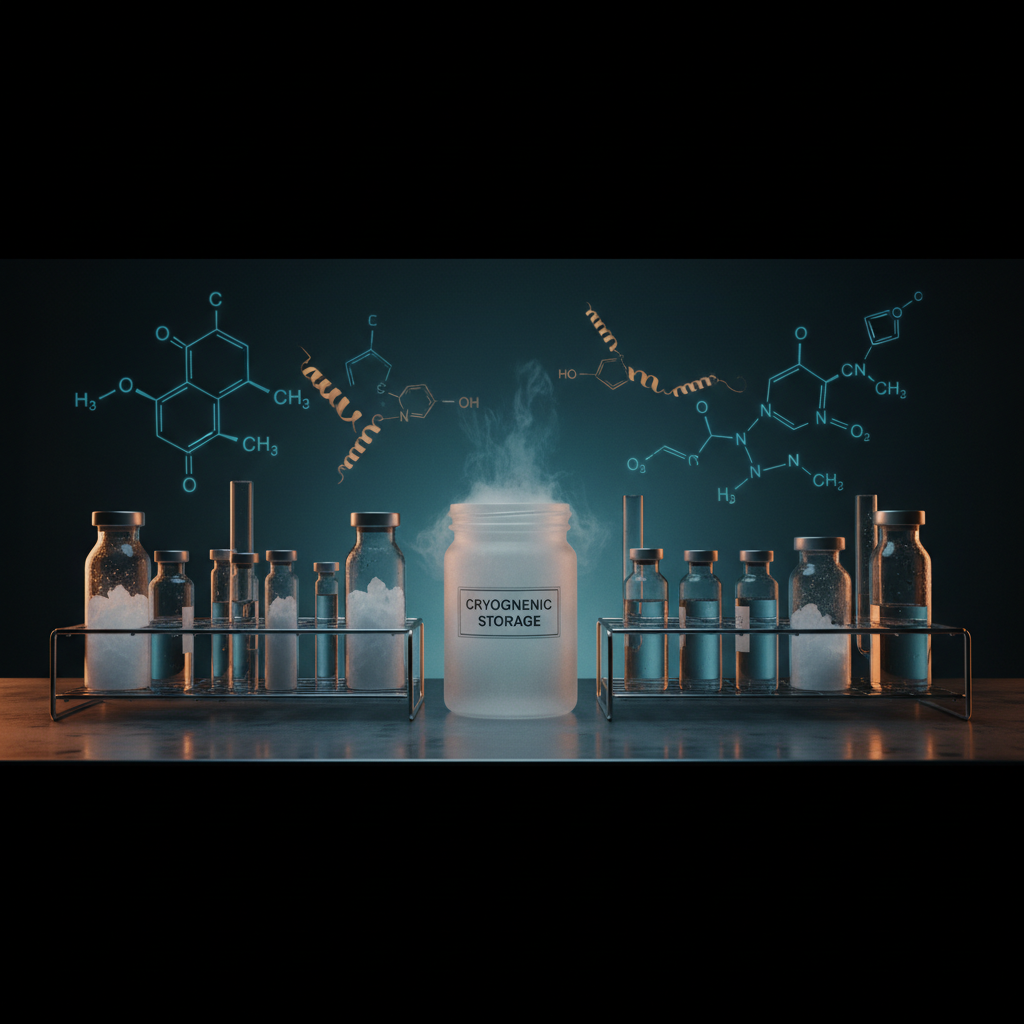
I remember the exact moment my stomach dropped. It was late 2021, I'd just gotten some bloodwork back, and let's just say the numbers weren't where a then-38-year-old software engineer wanted them to be. That scare was the catalyst that sent me down the rabbit hole of research peptides, a journey that quickly taught me a harsh truth: getting good peptides is only half the battle. The other, often overlooked, half is keeping them good.
After years of tracking my own data, reading every study I could get my hands on, and frankly, wasting a good chunk of money on degraded product, I can tell you this much: the storage habits I developed have saved me more grief and more peptides than meticulously vetting every single vendor. Don't get me wrong, vendor quality is paramount – I still spend an embarrassing amount of time sifting through the 282 vendors I track, noting that only 22% (61 of 282) even publish named-lab Certificates of Analysis (COAs), and a paltry 9 vendors clear a 4.5/5 average editorial rating in my system. But even the purest peptide from a top-tier vendor is useless if you treat it like a bottle of aspirin.
The "Fridge Door is Fine" Fallacy
When I first started, I figured "cold" was good enough. My fridge door, right? Convenient. Easy. Wrong. So incredibly wrong. The constant temperature fluctuations from opening and closing the door, the vibration from the compressor – these are subtle killers of peptide integrity. Peptides are delicate protein chains; they don't like being jostled or subjected to thermal shock.
My first few vials of BPC-157 and TB-500, bought with such high hopes, probably degraded significantly faster than they should have because of this. I was seeing diminished effects, and initially, I blamed the vendor. It was only after I started tracking my storage conditions meticulously, cross-referencing with studies on peptide stability, that I realized I was the problem.
Where I Source This LiveWell Peptides — Named-Lab COAs, US-Based For compounds like this one, I look for vendors that publish batch-specific COAs from named third-party labs. LiveWell Peptides meets that bar — HPLC + LC-MS per batch, US-based, credit cards accepted. Visit LiveWell Peptides → Affiliate link — we may earn a commission at no extra cost to you. Research use only. ## The "Reid's Peptide Preservation Protocol" (RPPP)
To combat this, I developed a simple, repeatable framework I call "Reid's Peptide Preservation Protocol" (RPPP). It's not rocket science, but it addresses the most common degradation pathways I've observed.
1. **Deep Freeze for Long-Term Storage (Unreconstituted):** If I'm not using a peptide within a month, it goes into the freezer. Not the ice-maker compartment, but the back of a dedicated freezer drawer. I aim for -20°C (-4°F) or colder. This halts most degradation. 2. **Dedicated Fridge Zone (Reconstituted & Short-Term Unreconstituted):** Once reconstituted, or if I plan to use an unreconstituted vial within a month, it goes into the main body of the refrigerator, ideally in a crisper drawer or a dedicated cool box. This area experiences far less temperature fluctuation than the door. 3. **Light Blockade:** Peptides are photosensitive. Every vial, whether in the fridge or freezer, is stored in an opaque, airtight container. Think small, dark amber glass jars or even just wrapped in aluminum foil inside a zip-top bag. 4. **Minimize Air Exposure:** When reconstituting, I use bacteriostatic water and inject it slowly down the side of the vial to minimize foaming. After drawing a dose, I don't "burp" the syringe back into the vial. Air, especially oxygen, is an enemy.
This protocol isn't just theory; it's based on empirical data from my own usage and stability observations. When I adhere to RPPP, I consistently get the expected effects from my peptides, even months after reconstitution for some of the more stable ones.
The "More is Better" Dilution Myth
Here's a counter-angle that might surprise some: I've found that over-diluting peptides for "easier dosing" can actually be detrimental. Common advice often suggests diluting a 5mg vial into 5ml of bacteriostatic water for 1mg/ml concentrations. While mathematically convenient, this increases the surface area exposure of the peptide to the solvent and potential contaminants.
For peptides I use frequently and in higher doses, I often opt for a more concentrated solution. For example, a 5mg vial into 2.5ml of bacteriostatic water yields 2mg/ml. This means fewer draws from the vial, less air introduced over time, and a slightly more stable environment for the peptide itself. Of course, this requires more precise measurement for smaller doses, but I've found the trade-off worthwhile for stability. It's a fine line, and you need to be confident in your measurement tools, but it's something worth considering for those looking to maximize peptide lifespan.
The Unseen Enemy: Contamination
Beyond temperature and light, I've learned that contamination is a silent killer. This isn't just about bacteria; it's about anything foreign. Dust, fibers, even trace amounts of other chemicals.
When I reconstitute, I meticulously clean the vial stopper with an alcohol wipe and let it air dry completely before inserting a needle. I use fresh, sterile syringes and needles for every draw. Reusing needles, even for the same vial, is a huge no-no in my book. The dulling of the needle can introduce rubber particles from the stopper, and it significantly increases the risk of bacterial ingress.
I also avoid touching the rubber stopper with my fingers after cleaning. It sounds obsessive, but when you're dealing with compounds that can cost upwards of $50-$100 per vial, a little obsession goes a long way in protecting your investment.
Why This Matters More Than You Think
You might be thinking, "Marcus, this is a lot of effort." And yes, it is. But consider the alternative. You spend good money on peptides, perhaps from a reputable source (and if you're looking for one, you can check out my /vendors page, or dive into my picks for /best-peptide). You're hoping for specific research outcomes. If your peptides degrade due to poor storage, you're not just wasting money; you're wasting time, and potentially drawing incorrect conclusions from your research because the active compound isn't what it should be.
I've learned this the hard way, through trial and error, through diminished effects, and through the frustration of seeing my carefully planned research stalled. My advice is simple: treat your research peptides like the delicate, valuable compounds they are. Your wallet, and your research, will thank you.
*Disclaimer: I am not a medical doctor. This article reflects my personal research, experiences, and opinions as a former software engineer exploring research-peptide pharmacology. It is intended for informational and research purposes only. Peptides discussed are for research use only and are not FDA-approved for human consumption. This content does not constitute medical advice, and no human dosing instructions are provided or implied. Always consult with a qualified healthcare professional before making any decisions related to your health or treatment.*
Frequently asked questions
Marcus, you're saying my storage habits are worse than a shady vendor? How can that be?
Look, I’ve been there. You get a fresh batch of peptides, you’re excited, and you just toss them in the fridge or a drawer. But I’ve learned the hard way that even the best quality peptides can degrade rapidly if not stored correctly. Think about it: a bad vendor might send you a slightly underdosed product, but improper storage can render a perfectly good peptide completely inert. I’ve wasted more money on good peptides gone bad due to my own negligence than I ever did on a genuine dud from a vendor. It's a tough pill to swallow, but it's the truth for research purposes only.
So, what's the biggest mistake you made that cost you the most peptides?
Hands down, it was the re-constituted peptide storage. For years, I’d mix up a whole vial, use a small amount, and then just stick the rest back in the fridge, sometimes for weeks. I thought, 'It's cold, it'll be fine.' Big mistake. Once those peptides are in solution, they're far more susceptible to degradation from light, temperature fluctuations, and even bacterial growth if you're not careful with sterile technique. I've seen perfectly good peptides lose significant potency within days if not stored properly after reconstitution. Now, I only reconstitute what I need for immediate research, or I aliquot and freeze immediately. This is crucial for maintaining peptide integrity for research applications.
Beyond reconstitution, what's another common storage pitfall you've encountered?
Oh, definitely the 'room temperature' myth. Some peptides are more stable than others, but generally, leaving lyophilized peptides out on the counter, even for a few days, can start to chip away at their integrity. I used to think as long as they weren't in direct sunlight, they were fine. Nope. Humidity, ambient temperature fluctuations, and even just the passage of time at higher temperatures can lead to significant degradation. Now, every single peptide, whether lyophilized or reconstituted, goes into a dark, airtight container, ideally in a freezer for long-term storage, or at least a refrigerator for shorter periods. Always aim for the coldest, darkest, and driest environment possible to preserve your peptides for research use only.
About the author
Marcus Reid: Marcus Reid spent a decade in software engineering before going deep into research on GLP-1 receptor agonists and peptide pharmacology. He reads the clinical literature, tracks his own biomarkers, and writes about what the data actually says. He is not a doctor; nothing here is medical advice.