Topical Peptide Formulations: The Labeling Details I Look for in Skin Research Products
By Marcus Reid — Fri Oct 02 2026
Topical Peptide Formulations: The Labeling Details I Look for in Skin Research Products — my honest, first-person take, backed by data from the 289 peptide vendors I track. Research use only.
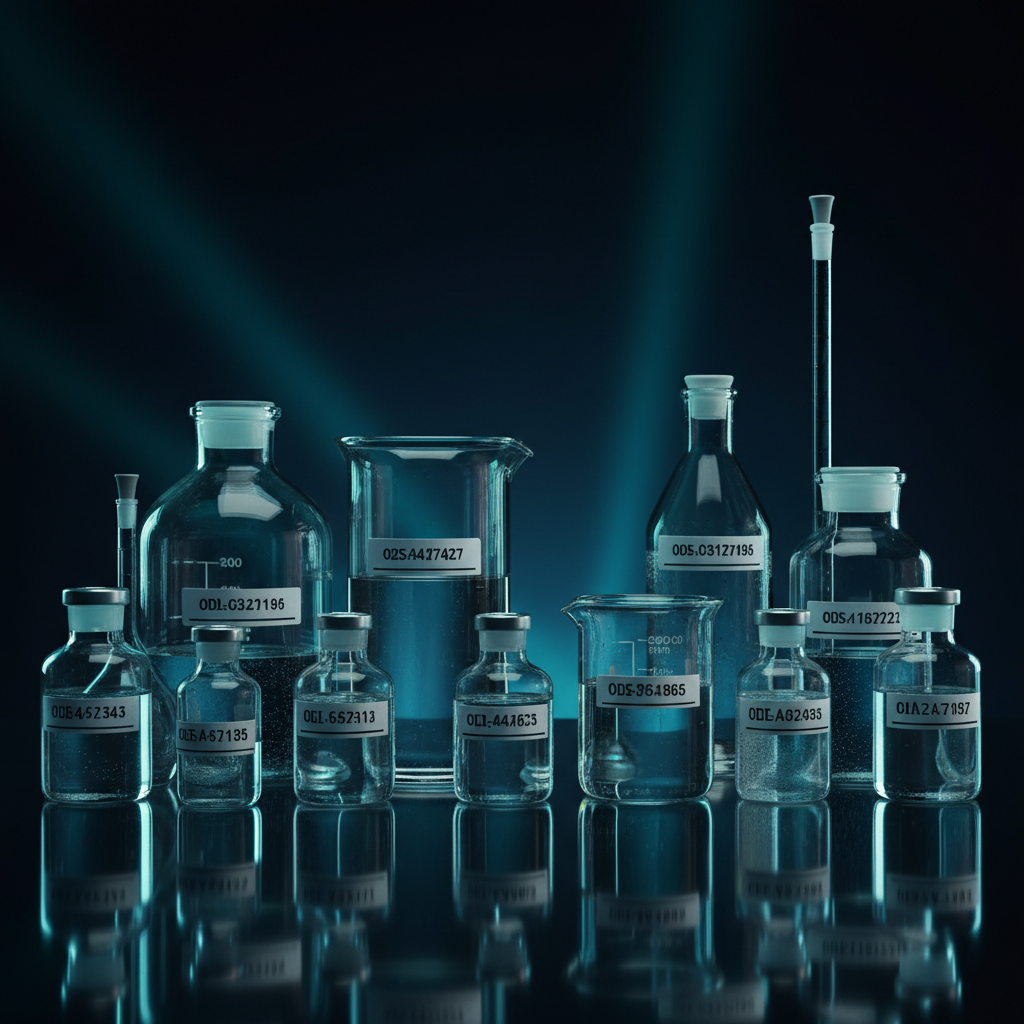
I still remember the first time I opened a topical peptide product and found no sequence, no lot number, and the only “COA” was a photocopy of a chromatogram with no axis labels. That sort of label noise is why I read every word on a bottle before I trust it for research. Over the years I’ve refined what actually matters on a peptide product label versus what’s vendor marketing — and I’ll walk you through the checklist I use every time I evaluate topical peptide research materials.
What I always look for first (the essentials)
When I open a product label, the first things I check are simple and non-negotiable: - The peptide sequence (or at least a clear INCI name). If a “GHK-Cu” is listed, I want the full sequence GHK and an explicit mention of copper stoichiometry. - Purity and method (e.g., “>95% by HPLC”), plus the assay method used. - A lot number and expiration or manufacture date. No lot = no traceability. - Storage conditions and formulation vehicle (oil, water, glycerin, serum base). Vehicle matters for stability and for topical research endpoints.
I track 289 vendor profiles in my database. From those profiles, only 65 of 289 (22%) publish named-lab COAs — that’s a painful reality for anyone doing rigorous topical peptide research. I also maintain a small set of editorial assessments: 1 currently have published editorial assessments, with an average assessed rating of 4.70/5. Only those assessed profiles receive ratings; unassessed vendors aren’t given inferred scores.
The “LABEL” checklist I use (quick, repeatable, memorable)
I developed the LABEL checklist so I don’t miss the detail that actually affects experiments. LABEL is five concrete steps I run through aloud when I inspect a product label:
- L — Lot, lab, and lab-of-analysis: confirm a lot number and which lab produced the COA. Prefer named third-party labs. - A — Active identity and assay: sequence, salt form (acetate, TFA), and assay method (HPLC, MS). - B — Buffer, vehicle, and pH: these drive stability and skin penetration. pH matters for copper-binding peptides especially. - E — Excipients, preservatives, and chelators: watch for EDTA, ascorbic acid, and other copper chelators. - L — Label claims vs COA: cross-check the label claim to the COA trace for match.
Run through those five steps and you’ll catch the things that break reproducibility.
Specifics I want for copper peptide formulation work
Copper peptides (e.g., GHK-Cu) are especially finicky on labels. If my aim is topical peptide research that includes a copper peptide formulation, I expect: - Explicit copper mention: “GHK-Cu (1:1 molar ratio with Cu2+)” or similar. Vague “contains copper” is not enough. - Information about chelators or antioxidants: Vitamin C, EDTA, or high phosphate can strip copper or alter binding. If a product lists EDTA, I flag it as potentially incompatible. - pH on the label or COA: copper coordination and peptide stability are pH-dependent; pH 4–6 behaves differently than neutral. - Evidence of identity beyond HPLC alone — MS is preferable for copper-peptide complexes because retention times shift when copper is bound.
I’ll also cross-reference the formulation with my notes on vehicles — copper peptides in oily creams behave differently than the same peptide in water-based serums for permeation and stability.
How I interpret COAs and what “named-lab” really means
A COA is only as useful as the methods and the lab credibility. I prioritize COAs that: - Name the testing laboratory (vendor tests in-house are useful, but named third-party labs are better). Remember: only 65 of 289 vendors I track publish named-lab COAs. - Include methods (e.g., HPLC gradient conditions, MS method) and results for identity + purity. Short “>95% purity” lines without method details raise my suspicion. - Show lot-specific results, not generic product specs.
If a vendor gives a chromatogram, I want the axes and markers. If an MS spectrum is provided, check that the m/z matches the expected adduct (e.g., [M+H]+ or [M+Cu]2+ where appropriate).
A short label table I use to triage products
| Label element | Why I care | |---|---:| | Sequence/INCI | Confirms the active peptide | | Lot number | Traceability | | Purity + method | Reproducibility | | COA lab named | Independent verification | | pH/vehicle | Stability and bioavailability |
(Short cells so I can glance quickly during ordering.)
One counter-angle: purity obsession vs practical stability
Most guidance I see screams “only >95% purity!” and while high purity is generally preferable, I push back when that advice is treated as absolute. In my experience, the impurity profile matters more than a single purity number. A 90% peptide that has benign truncated sequences and no metal-binding contaminants can be more predictable in formulation than a 98% batch contaminated with reactive fragments or heavy metal residues. That doesn’t mean I accept low-quality suppliers — it means I read the COA, ask for impurity IDs, and judge risk from context (formulation type, planned assay, and downstream analysis). For topical peptide research, stability data and impurity identity matter as much as the headline purity percentage.
Common label red flags (and what I do next)
If I see any of these on a product label, I either ask for more info or move on: - “Proprietary blend” or vague % without sequence. Red flag. - No lot number or expiration. I won’t use it in controlled studies. - “GHK-Cu” without copper stoichiometry or pH. I request MS evidence of the complex. - Conflicting claims between label and COA. I demand a corrected COA or a different lot.
When in doubt I reach for my vendor notes or my vendor database. There’s a reason I also maintain an editorial slice of profiles: 1 assessed vendors clear a 4.5/5 rating in my evaluations — those vendors clearly document lab-of-analysis and COA method, and that consistency matters on experimental reproducibility.
Practical ordering and record-keeping tips
- Save a PDF of the label and COA for the lot you receive. Link it to your lab notebook entry. - If using concentrations, record molar concentration, not just percentage — that’s crucial for cross-study comparisons. Use my [/peptide-calculator](/peptide-calculator) when converting. - Keep a short vendor note in your procurement file (I store mine under [/vendors](/vendors)). If you need to compare sequences or recommended vehicles across peptides, my [/peptides-list](/peptides-list) index is where I start.
Final thoughts
Labels are where vendor transparency lives — a good label plus a named-lab COA saves weeks of troubleshooting. I’ve learned to be skeptical in a friendly way: ask for the lot-specific COA, the pH, the vehicle, and the copper stoichiometry when relevant. Those small details change outcomes in topical peptide research more often than raw purity numbers.
*This content is for educational and research-use-only purposes. I am not a doctor; this is not medical advice and nothing in this article should be interpreted as guidance for human use.*
Frequently asked questions
What labeling information do I prioritize when evaluating topical peptide formulations for skin research?
When I evaluate a topical peptide product I first look for clear peptide identity (full sequence, amino‑acid modifications, and salt form), the stated concentration (with units), and a Certificate of Analysis or batch lot number that links to analytical data. I also check purity and the analytical method used (HPLC, LC‑MS), the vehicle and excipients (penetration enhancers, preservatives, chelators), pH, storage and expiry information, and whether the supplier provides an SDS and a point of contact. Those items let me judge whether the sample is appropriate and traceable for reproducible in vitro or ex vivo skin work, and whether any excipient might confound my assays; for educational and research-use-only purposes; this is not medical advice and no content should be treated as guidance for human use.
How should I interpret peptide concentration and units listed on a label?
I always check whether concentration is given as mg/mL, percent (w/w), or molarity — for mechanistic work I prefer molar concentration because biological activity depends on molar amount, and I convert mg to moles using the peptide’s molecular weight from the sequence. I verify whether the label refers to the peptide free base or a salt form (acetate, trifluoroacetate) and whether the declared concentration is of the active peptide or of a ‘complex’ or proprietary blend, and I confirm the value against the CoA. If the label lacks this clarity I request raw analytical data before proceeding; for educational and research-use-only purposes; this is not medical advice and no content should be treated as guidance for human use.
What labeling red flags make me reject a topical peptide product for my lab work?
I’m cautious when labels use vague terms like “peptide complex” without sequences, omit a CoA or batch number, fail to list purity and analytical methods, or give no storage/expiration instructions — those are immediate red flags. I also avoid products that hide concentrations inside proprietary blends, lack preservative or vehicle details for aqueous formulations, make clinical or therapeutic claims inconsistent with a research‑grade product, or have no traceable supplier contact or SDS. Price that’s too low relative to published synthesis/purification costs and inconsistent labeling between lots are additional reasons I won’t use a material in controlled skin research; for educational and research-use-only purposes; this is not medical advice and no content should be treated as guidance for human use.
References
About the author
Marcus Reid: Marcus Reid spent a decade in software engineering before going deep into peptide research, product documentation, and the clinical literature. He writes about what the data and the paperwork actually say. He is not a doctor; PeptideTally content is educational and does not constitute medical advice.