Lyophilized Peptide Storage: The Research-Use Documentation I Expect to See
By Marcus Reid — Sun Oct 04 2026
Lyophilized Peptide Storage: The Research-Use Documentation I Expect to See — my honest, first-person take, backed by data from the 289 peptide vendors I track. Research use only.
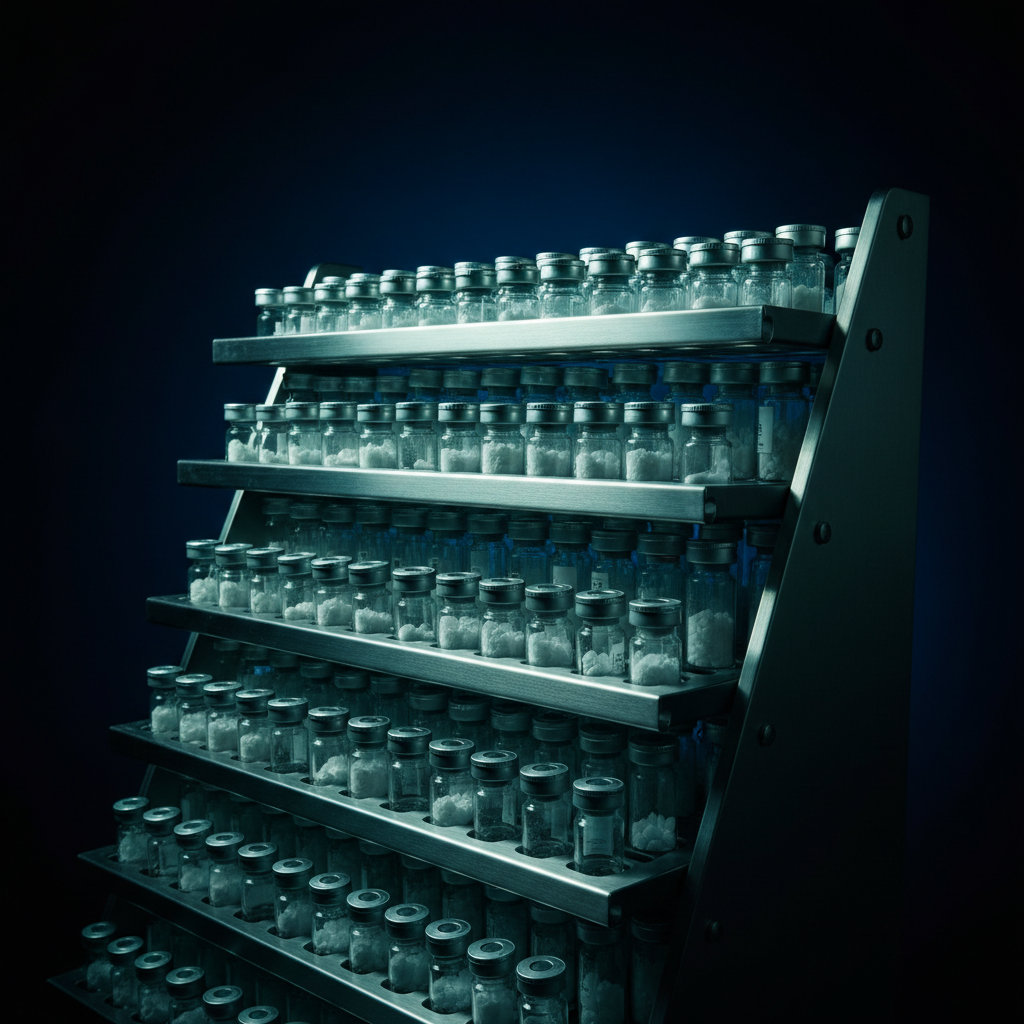
Lyophilized Peptide Storage: The Research-Use Documentation I Expect to See =============================================================================
I check vendor paperwork like other people check the weather. If a supplier can’t clearly document how a lyophilized peptide was handled before it hits my bench, I treat their product like an unknown. Over years of ordering and dissecting COAs, I’ve learned you can save time and failed experiments by reading the label and the PDF first.
Why the paperwork matters (and what usually isn’t said) -------------------------------------------------------
Lyophilized peptide storage isn’t mysterious chemistry — it’s moisture control, trace contaminants, and honest provenance. What vendors publish (or don’t) tells you what to expect when you open the vial. In my vendor database I track 289 vendor profiles; only 22% (65 of 289) publish named-lab COAs. That gap matters: chromatograms, mass spectra, and water-content analysis change how I store and handle a product on day one. Right now just 1 vendor in our system has a published editorial assessment; the average assessed rating is 4.70/5, and that assessed vendor clears a 4.5/5 rating — I treat that single, assessed profile’s documentation as a model to emulate, not the norm.
The data I expect to find on every product page ------------------------------------------------
When I look at a lyophilized peptide listing, these are the minimum documentation items that make me comfortable ordering for bench research:
- Lot-specific COA (PDF) with clear lot number and date. - HPLC chromatogram and retention time, with integration report. - Mass spectrum (MS or MS/MS) demonstrating expected mass peak(s). - Water content (Karl Fischer) or measured residual moisture. - Identity confirmation method and purity percentage (with threshold). - Storage recommendation (exact temperature range) and expiration/retest date. - Container details: vial type, septum material, presence of desiccant or nitrogen backfill. - Shipping conditions (ambient / cold pack / dry ice) and why. - Reconstitution suggestions and recommended solvents (for bench convenience). - Contact for stability questions and named lab where analyses were performed.
If the COA omits chromatogram images or lists only a generic purity number, I assume minimal analytical support and may either ask questions or choose a different supplier. You can find vendors that publish better documentation on our /vendors page; for quick peptide selection, I reference /peptides-list. If you need dosing math for bench prep, I use /peptide-calculator to avoid basic arithmetic errors.
My V.I.A.L. Checklist (how I vet storage documentation) -------------------------------------------------------
I use a short, repeatable checklist — I call it the V.I.A.L. Checklist — four steps I run through on every order:
1. Verify COA linkage — Confirm the product page links to a lot-specific COA (PDF) and that the lot number on the vial will match the COA. 2. Inspect analytics — Open the chromatogram and MS. Check for a dominant expected peak; major unexplained peaks set off a red flag. 3. Aliquot & packaging notes — Look for evidence of desiccant, nitrogen backfill, and clear vial closure specs. 4. Label & log requirements — Confirm vendor-provided storage temp, expiry, and any handling notes to copy into my lab’s inventory entry.
This framework keeps me honest and makes the differences between vendors visible in minutes.
Quick storage reference (my practical expectations) ---------------------------------------------------
| Condition | Typical expected handling | |---|---| | Short-term bench (days-weeks) | 4°C, sealed with desiccant | | Long-term storage (months-years) | −20°C with desiccant | | Extremely hygroscopic peptides | −20°C, sealed under inert gas | | Shipping note | Cold pack or dry ice per vendor doc |
(These are my practical defaults only — I modify them when a vendor provides stability data that says otherwise.)
Peptide vial handling: what actually helps -----------------------------------------
“Peptide vial handling” is more than a buzz phrase — it’s how you move that dry cake without ruining it. I do the following every time:
- Keep vials in a sealed secondary container with a fresh desiccant packet when not in use. - Minimize time at room humidity: open the vial only when I’m ready to aliquot or reconstitute. - If I must aliquot lyophilized powder (rare), I do it in a drybox or with a dry glovebag. Transferring dry powder by tipping vials in open air is a fast way to introduce moisture. - Record the lot number and storage change in my inventory log before the vial leaves the freezer.
Counter-angle: where I disagree with the common advice ------------------------------------------------------
The standard chorus says: “Always store lyophilized peptides at −80°C.” I push back. In my experience, that blanket rule ignores the real failure mode — moisture ingress. A dry, well-sealed vial with a documented low residual-water value from a named lab will often fare just as well at −20°C as at −80°C. The downside of defaulting to −80°C is practical: freezer capacity, repeated warm-down exposure during access, and false security that temperature alone solves stability problems. I prioritize verifiable moisture data and container integrity over a one-size-fits-all temperature rule. If a vendor provides real stability data showing benefit at −80°C, I follow it. But if they only list “store at −80°C” with no supporting analytics, I treat that claim skeptically.
Red flags that make me ask questions or refuse an order -------------------------------------------------------
- No lot-specific COA or only a generic “spec sheet.” - COA with HPLC trace showing lots of unresolved peaks. - Missing water content or unspecified vial sealing materials. - Vendor claims “room temperature stable” without shelf-life data or humidity tests. - Shipping notation “ambient” with no desiccant or sealed bag statements.
If I find any of these, I either contact the vendor for clarification, request a named-lab COA, or choose a different supplier. You can often pre-filter vendors on the /vendors page for those that post detailed COAs.
Final practical notes before you hit purchase --------------------------------------------
- Copy the storage recommendation and lot number into your inventory system immediately. - If you plan to reconstitute and aliquot, plan aliquots for single use and freeze them at the temperature recommended for solutions (different than dry cake). - When comparing prices, factor in documentation quality. I’d rather pay a bit more for a lot with a named-lab COA than save on a product with thin paperwork. - Use /peptide-calculator to prepare accurate reconstitution volumes and concentrations — it saves the dumb mistakes that ruin a run.
I’ve learned the hard way that the paperwork predicts the bench outcome more reliably than the brand name on the box. Learn to read COAs quickly; treat moisture and container specs as first-class data points; and use my V.I.A.L. Checklist to keep ordering consistent.
*This article is for educational and research-use-only purposes. I am not a doctor; none of this content is guidance for human use.*
Frequently asked questions
What documentation do I expect to receive with a shipment of lyophilized peptide?
I expect a complete Certificate of Analysis (COA) that lists identity (e.g., MS), purity (HPLC area%), assay, counter‑ion, moisture content (Karl Fischer or equivalent), residual solvents, lot/batch number, manufacture date and manufacturer‑assigned expiry or stability statement. I also want the Safety Data Sheet (SDS), shipping temperature report (e.g., dry ice / frozen indicators or temperature logger), packaging description (vial type, stopper, secondary packaging), and any vendor stability or handling notes; chain‑of‑custody and invoice/packing slip should reference the lot so I can match paperwork to samples on arrival. for educational and research-use-only purposes; this is not medical advice and no content should be treated as guidance for human use.
How should I document storage conditions and ongoing stability in my lab?
I require an SOP that defines the approved storage temperature range for that peptide (as stated by the manufacturer or established by my lab’s stability data), where the material is stored (freezer ID, shelf/rack), and the inventory location tied to the lot number. I keep continuous temperature logs with calibration records and alarm/escalation records, document any excursions and investigations, record periodic QC or retain‑sample stability checks used to extend or confirm shelf life, and maintain a contingency plan for freezer failure so the documentation trail shows how integrity was preserved. for educational and research-use-only purposes; this is not medical advice and no content should be treated as guidance for human use.
What records should I create when I open, aliquot, or repackage a lyophilized peptide vial?
I document the original lot and COA reference, date/time opened, name of the person who opened it, the amount withdrawn, and the destination aliquot IDs; every new aliquot gets a label with source lot, concentration (if relevant to the experiment), date prepared, storage conditions, expiry established by my lab’s stability data, and preparer initials. I also log the aseptic/handling conditions, any QC sample results taken at the time of aliquoting, disposal of unused material, and update the master inventory and deviation log if anything unexpected occurred so there is full traceability for audits. for educational and research-use-only purposes; this is not medical advice and no content should be treated as guidance for human use.
References
About the author
Marcus Reid: Marcus Reid spent a decade in software engineering before going deep into peptide research, product documentation, and the clinical literature. He writes about what the data and the paperwork actually say. He is not a doctor; PeptideTally content is educational and does not constitute medical advice.