Ipamorelin Research: The Questions I Use to Compare Product Claims
By Marcus Reid — Sat Sep 05 2026
Ipamorelin Research: The Questions I Use to Compare Product Claims — my honest, first-person take, backed by data from the 287 peptide vendors I track. Research use only.
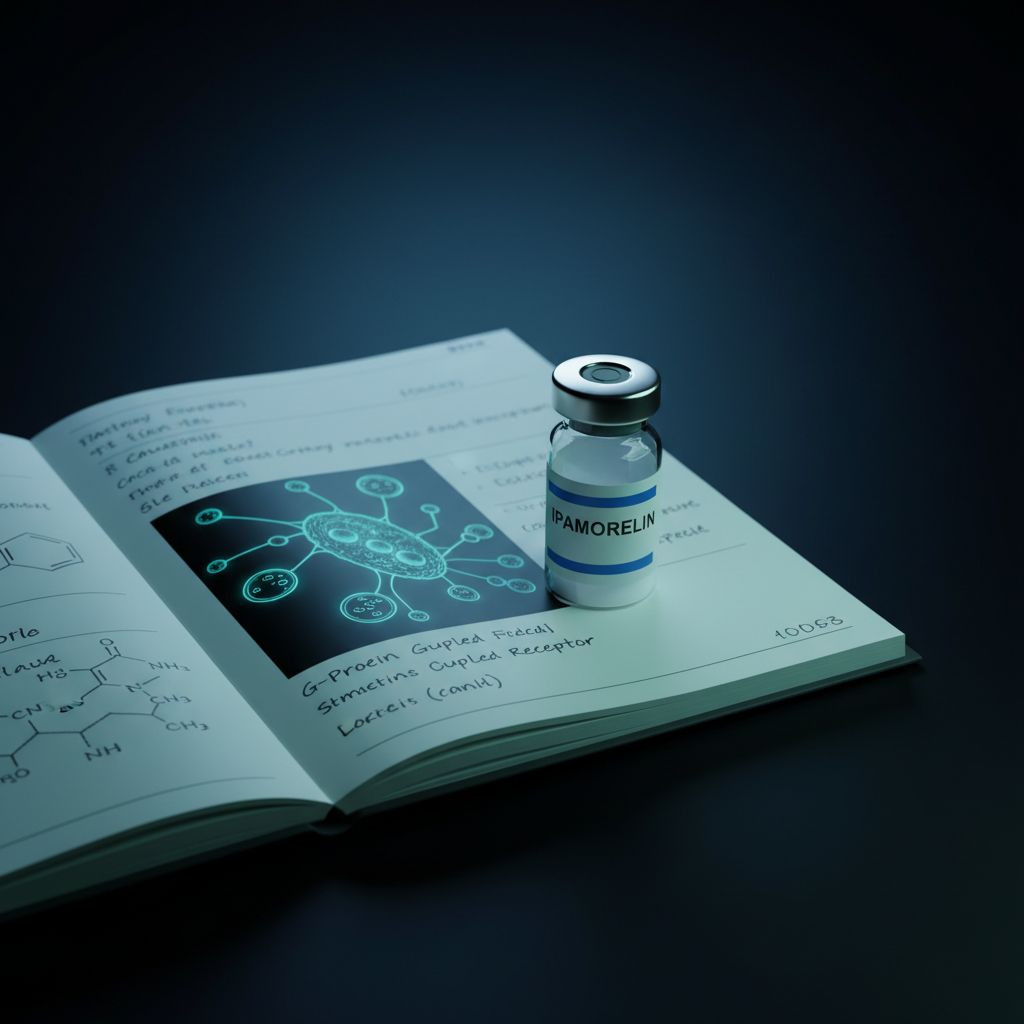
# Ipamorelin Research: The Questions I Use to Compare Product Claims
I’ve spent years chasing down peptide COAs, re-running HPLC traces in my lab, and arguing with vendor support to get method details. When it comes to ipamorelin research, the difference between a useful reagent and a frustrating bottle of ambiguous claims is almost always in the paperwork — not the price tag.
The first things I look for (fast triage)
When a vendor lists an ipamorelin peptide, I run a three-minute triage before reading marketing text.
- Does the product page show a named-lab COA (Certificate of Analysis)? If not, I move down the list. In my vendor database I track 287 vendor profiles; only 65 of those (23%) actually publish named-lab COAs. That tells you how rare transparent documentation still is. - Is the sequence explicit and correct (Aib-His-D-2-Nal-...) and matching canonical literature? If the sequence is vague, the product is a no-go. - Is there an assay method listed (HPLC, LC-MS) and is the lab identified? Right now, only one vendor in my dataset has a published editorial assessment; assessed vendors average a 4.70/5, and one assessed vendor clears a 4.5/5 rating — but those are exceptions, not the rule.
These three quick checks separate most sellers into “worth investigating” and “move on.”
The CORE Checklist I actually use (my practical framework)
I use a short, repeatable checklist I call the CORE Checklist. It’s four concrete steps I run on every ipamorelin COA or product page.
1. Confirm sequence & lot number - Verify the amino-acid sequence against publications. Check the COA lot number matches the product page. No lot number, no confidence.
2. Obtain a named-lab COA with methods - I want a COA from a named, independent lab that lists HPLC conditions and MS confirmation. “Reported purity” without method is nearly meaningless.
3. Review impurity profile and assay sensitivity - Look beyond “>98%” — check the HPLC trace, retention times, and whether major impurities are identified. If MS is present, confirm the parent ion and major fragments.
4. Examine storage, formulation, and chain-of-custody info - Was the peptide shipped cold? Is it lyophilized powder with recommended storage? Look for stability notes and reconstitution solvents.
I run CORE in that order because sequence and COA identity errors are the most common traps I’ve seen.
What I want on an ipamorelin COA
“Purity: 99%” is a headline, not a story. On the COA I want:
- Named lab and contact info (no anonymous PDFs). - Lot number and issue date that match the product listing. - HPLC method: column, solvent system, gradient, detection wavelength. - Mass spec confirmation with m/z shown for the parent ion. - A tiny impurity table or at least an HPLC trace showing peaks and area percentages.
If a COA lacks method details I treat the purity number as marketing. Remember: across my tracked vendors, only a minority publish named-lab COAs — that makes the ones that do publish them extra valuable to me.
How I read purity numbers (counter-angle)
Most people are taught to chase “the highest purity” and assume 98–99% equals high quality. I push back on that hard. Purity alone is a weak proxy unless you know how it was measured. For research, a 95% ipamorelin with a clear HPLC trace and solid MS confirmation can be more trustworthy than a “99%” claim backed by an anonymous, method-less certificate.
Why? Because impurities matter qualitatively. A 1–3% impurity that’s a truncated peptide or a synthetic byproduct can have unpredictable bioactivity in cell assays. Conversely, a well-characterized 5% impurity of inert salt is less concerning. So I focus on impurity identity and the assay used, not a single percentage number.
Red flags that kill a vendor for me
- No lot number or COA mismatch with the product page. - COAs that are image-PDFs with blurred traces or missing axes. - Purity claims with no method or with “analyzed by internal method” only. - Vendor refuses to name the testing lab or provide raw data on request. - Shipping and storage details that are vague (no temp control for a peptide).
If a vendor fails one of these, I either request more data or stop the process.
Practical comparisons: what I actually do when choosing
- I line up 2–3 vendors that pass CORE and download their COAs. - I compare HPLC conditions — different methods mean retention time comparisons are useless unless methods are identical. - I check MS data for the correct m/z and for major fragment peaks matching reference spectra. - If I care about biological assays, I look for batch-to-batch consistency: do multiple lots show the same impurity pattern?
If you want a shortcut to find vendors I monitor or to cross-check peptides, I keep an index at /vendors and a product list at /peptides-list. For calculations on reconstitution and molarity I use /peptide-calculator regularly.
The paperwork I ask for in vendor conversations
When I email support, my message is brief and specific:
- “Please send the named-lab COA with lot number X and the HPLC method used.” - “Can you provide LC-MS spectra for the lot?” - “How was the peptide stored and shipped for that lot?”
Good vendors answer with files and method details. Vendors that dodge or send only marketing PDFs are deprioritized.
Small experiments I recommend before committing
If the peptide will be central to a project, I sometimes order a small pilot lot and run an in-house check (HPLC/MS). It’s conservative and cheap compared to repeating an entire project when a reagent underperforms. And if you’re juggling multiple vendors, I stagger pilot orders so you can compare side-by-side.
Final practical tip
If you’re new to peptide sourcing, don’t assume price equals quality. Use the CORE Checklist, insist on named-lab COAs, and weigh impurity identity over headline purity. I’ve seen vendors with high review scores but opaque COAs, and one clearly assessed vendor in my data set really stood out once I dug into method details — that level of transparency is what I pay for.
*This article is for educational and research-use-only purposes. I am not a doctor and this is not medical advice; nothing here should be used as guidance for human administration.*
References
About the author
Marcus Reid: Marcus Reid spent a decade in software engineering before going deep into peptide research, product documentation, and the clinical literature. He writes about what the data and the paperwork actually say. He is not a doctor; PeptideTally content is educational and does not constitute medical advice.