Copper Peptide Stability: The Handling and Documentation Questions I Ask
By Marcus Reid — Wed Sep 16 2026
Copper Peptide Stability: The Handling and Documentation Questions I Ask — my honest, first-person take, backed by data from the 288 peptide vendors I track. Research use only.
I remember the first time I opened a vial of GHK-Cu thinking “this is simple”—and then spent a week chasing conflicting storage notes, COAs that didn’t say how they measured copper, and a vendor rep who insisted room temperature was fine. After years of comparing primary literature, COAs, and suppliers’ tech notes, I now treat copper peptide stability as a set of specific questions, not a single rule. If you handle these peptides for research, you’ll save time and failed experiments by asking the right ones up front.
## The reality I track: vendor coverage and COAs In my vendor database I track 288 vendor profiles. Of those, only 65 (23%) publish named-lab COAs — that’s the single biggest gap I see when people assume “COA present = full transparency.” I don’t mean to be alarmist; I just want you to know how rare thorough documentation actually is before you buy.
## The first things I check on a product page When I look at copper peptide stability claims I ask three short, practical questions before anything else: - Is there a named-lab COA that lists method (HPLC, LC-MS) and lot number? - Does the COA include copper content or a metal-binding assay, not just “% peptide”? - Are there storage instructions and a stated stability study (time, temp, buffer)?
If the vendor can’t answer those concisely, I move on or treat the purchase as higher risk.
## My STAB checklist (what I actually run through every time) I built a small, repeatable framework I call the STAB checklist — four concrete steps I use on every copper peptide order:
1. Source & Certificate — Confirm the COA is from a named third-party lab and lists both peptide purity AND copper content (or a binding assay). 2. Temperature & Packaging — Note whether the peptide was shipped cold, how it’s packaged (desiccant, amber vial), and the vendor’s recommended storage temp. 3. Assay Evidence — Look for LC-MS or ICP-MS data; if only HPLC area% is provided, flag it for follow-up. 4. Buffers & Handling Notes — Check recommended reconstitution solvent, pH range, and whether they advise aliquoting or avoiding freeze/thaw.
That checklist keeps me from being seduced by nice photos and bold claims. It’s short because I use it every time; you can memorize it in ten minutes.
## What the documentation should actually show A useful COA or technical sheet for GHK-Cu or related copper peptides should include: - Lot-specific LC-MS: intact mass confirming copper-bound species (not just a peptide peak). - A statement of how copper was quantified (ICP-MS, AAS) or a binding assay. - Stability study summary: timepoints, temperature, solvent, and analytical endpoint. - pH/reconstitution guidance (some manufacturers bury pH notes in protocol PDFs).
Too many COAs stop at “>98% HPLC purity.” That tells you about major peptide fragments, not whether the copper sits where it should or whether oxidation is occurring.
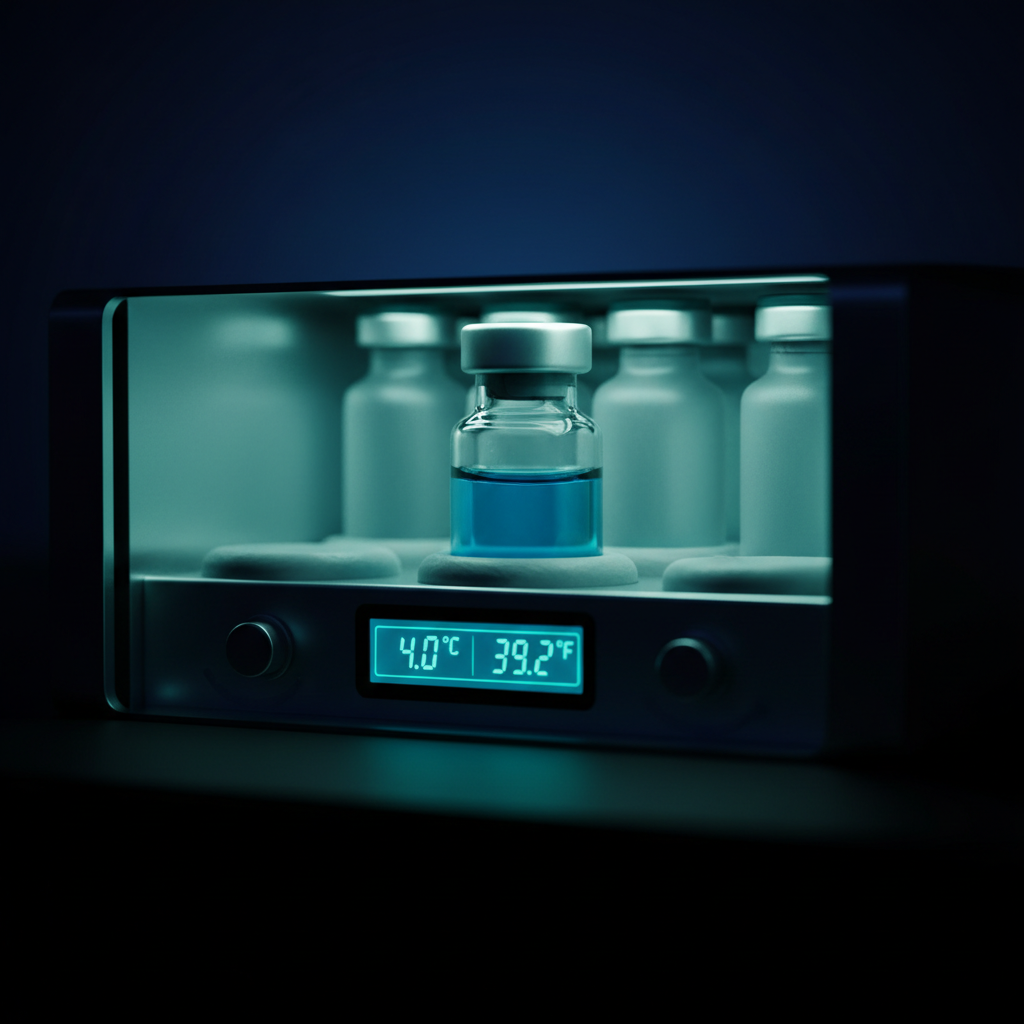
## Practical handling I actually use in the bench From my hands-on experience and from dissecting vendor methods, here’s what I do for peptide stability in practice: - For long-term storage, I keep lyophilized GHK-Cu in airtight amber vials with fresh desiccant at −20°C. That’s my default if I don’t have a validated vendor stability study. - For working solutions, I reconstitute in a low-ionic, slightly acidic buffer (many literature examples favor pH ~5–6 for GHK-Cu to keep copper coordinated) and immediately split into single-use aliquots to avoid freeze/thaw. - I avoid making large concentrated aqueous stock and leaving it at 4°C for days unless the vendor provides data showing stability in that exact buffer. - When I need to store solution short-term, I prefer 4°C for up to a few days if data supports it; otherwise, I prepare fresh.
Note: aliquoting is more important than absolute temperature in my workflow because repeated freeze/thaw kills reproducibility faster than a single cold storage.
## Assays I trust more than “% purity” HPLC is fine for peptides generally, but with metal-binding peptides the critical measures are: - LC-MS showing the peptide + copper adduct (mass shift). - ICP-MS or AAS for total copper content per mass of peptide. - Functional or binding assay where applicable (e.g., UV-vis copper-ligand spectra).
If a vendor provides only an HPLC chromatogram with retention times but no mass confirmation of the copper-bound species, I treat that product as incompletely documented.
## A counter-angle: don’t treat “always freeze” as gospel Everyone says “freeze everything” — but I push back on that as a universal rule. In my experience and reading of ghk-cu storage research, freeze/thaw cycles can be as bad as warm storage because they promote aggregation or local pH shifts that release copper. For some formulations (lyophilized with proper excipients), room-temperature storage in the dark for weeks is acceptable. For others, a single aliquot frozen at −80°C and thawed once is worse than several small refrigerated aliquots used within 72 hours. My point: the right approach depends on the formulation and the documented stability data — not a blanket freeze rule.
## When to trust a vendor — and when to run your own test I will trust a vendor when they: - Publish named-lab COAs that include mass spec of the copper-bound species, or - Provide an independent stability study showing retention of copper content over time in your intended buffer.
If those aren’t available I run a sanity check: prepare a small batch, analyze by LC-MS or send for ICP-MS if copper concentration is critical to my assay. It costs a little, but failed experiments due to ambiguous copper coordination cost way more.
## Where I go next (resources I use weekly) When I’m vetting suppliers I cross-check them against my internal lists: /vendors for vendor context, /peptides-list for peptide-specific notes, and I use the /peptide-calculator to prepare molar stock calculations tied to copper stoichiometry. Those three quick steps keep my ordering and assay prep consistent.
## Final, practical tips from years of handling copper peptides - Ask for the lot-specific LC-MS and ICP-MS before you buy. If they say “we don’t do ICP-MS,” ask how they confirm copper content. - Prioritize vendors who publish full method details over those with polished marketing. Remember: 23% of vendors in my tracking actually publish named-lab COAs — that’s the pool that merits extra trust. - Aliquot, avoid repeated freeze/thaw, and validate in your assay system — not a generic shelf-life claim.
*This is my practical guide from hands-on work and document review — not a set of sterile rules. I’m usually scrappy: I’ll accept a vendor’s claim only once I can see the data that matters for copper peptide stability.*
*This content is for educational and research-use-only purposes. I am not a doctor, and nothing here should be interpreted as advice for human use.*
Frequently asked questions
How do I store copper peptide solutions to preserve their stability?
I treat copper–peptide preparations as oxidation- and contamination-sensitive reagents: I aliquot into single-use, low-bind, metal-free consumables, protect them from light, and keep them cold to minimize chemical change and microbial risk. I avoid repeated freeze–thaw cycles, label every vial with lot, date and number of thaw events, and segregate peptide stocks from bulk metal supplies to prevent cross-contamination. I also eliminate obvious sources of adventitious metal (clean glassware, dedicated plasticware) and record the storage conditions in my log so any future instability can be traced. for educational and research-use-only purposes; this is not medical advice and no content should be treated as guidance for human use.
What documentation and QC checks do I insist on when receiving or preparing copper peptide lots?
When I receive a lot I immediately capture supplier lot numbers, COA details, expiration, and storage/handling notes, and I document the chain-of-custody and who opened or reconstituted the material. My routine QC checklist includes verifying identity and purity (analytical data such as mass spec/HPLC as available), the copper:peptide stoichiometry or metal content, solution pH, visual inspection (color or turbidity), and a reference activity or binding assay where appropriate; I record all raw data and any deviations in the batch file. I also define acceptance criteria up front and log any corrective actions and trend data so I can detect gradual degradation across time. for educational and research-use-only purposes; this is not medical advice and no content should be treated as guidance for human use.
How do I decide whether a sample is still usable or should be discarded or re-tested?
I look for objective, documented signs rather than gut feeling: appearance changes (unexpected color or cloudiness), shifts in pH, out-of-spec results from my identity/purity or metal-content checks, or loss of signal in a functional assay trigger re-testing. If a retest confirms the problem, I quarantine the remaining material, document the failure, initiate a root-cause check (storage log, handling events, reagent lot cross-checks), and typically dispose of the lot if it cannot be brought back into spec; all decisions and justifications go into the stability file. When in doubt I err on the side of traceable documentation and conservative disposal to protect downstream work. for educational and research-use-only purposes; this is not medical advice and no content should be treated as guidance for human use.
References
About the author
Marcus Reid: Marcus Reid spent a decade in software engineering before going deep into peptide research, product documentation, and the clinical literature. He writes about what the data and the paperwork actually say. He is not a doctor; PeptideTally content is educational and does not constitute medical advice.