Best Peptides for Energy: A Research-Based Ranking of 5 Compounds
By Marcus Reid — Fri Jun 26 2026
MOTS-c, NAD+, SS-31, Humanin, and Semax are the five compounds with the strongest preclinical evidence for energy-related mechanisms. Here's how they rank and where to find them — for research use only.
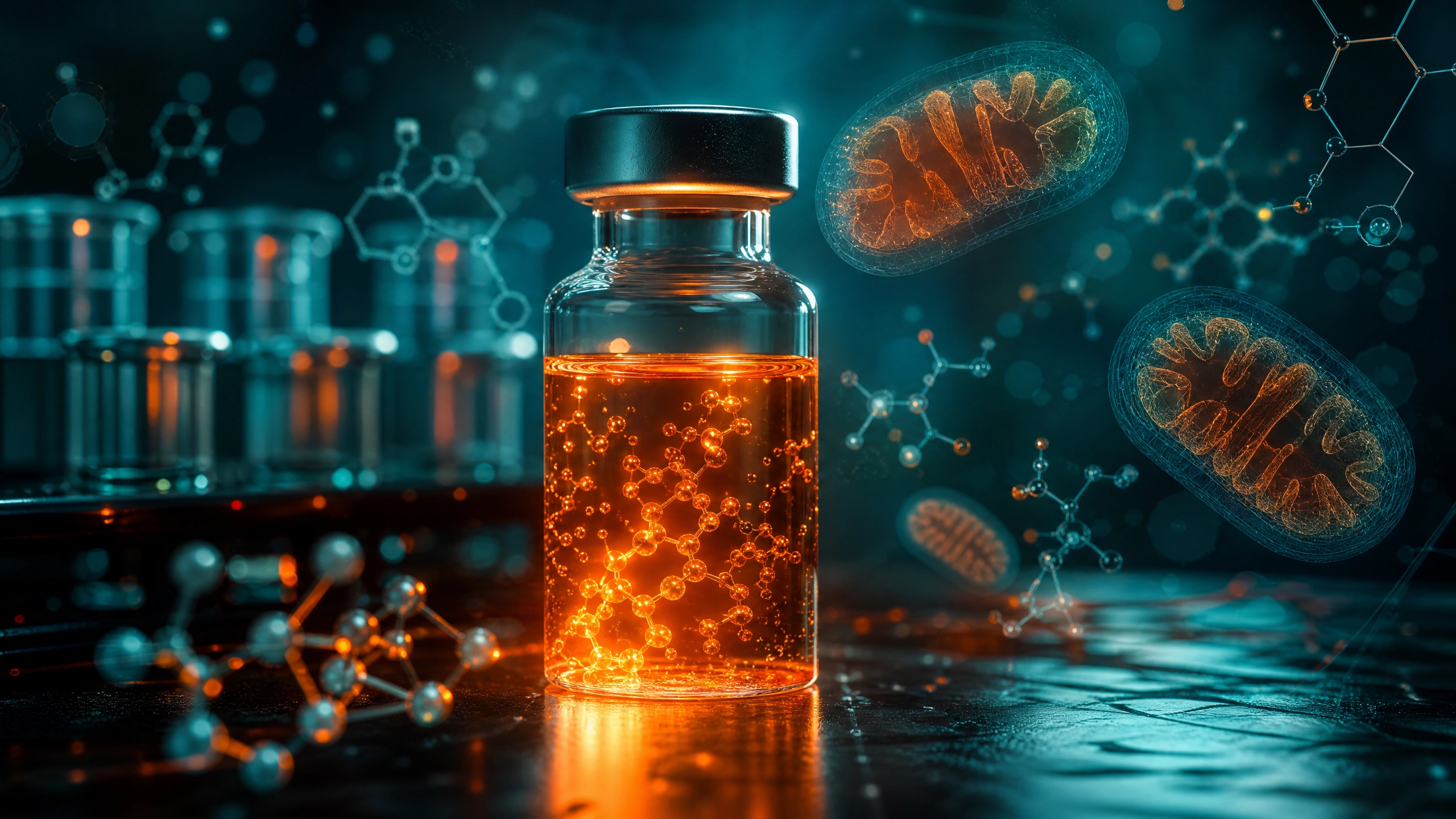
If you're researching which peptides have the most documented relationship with cellular energy metabolism, you're not alone. This is one of the most searched topics in the research peptide space — and also one of the most misunderstood. The compounds listed here are not stimulants. They don't work like caffeine. The research interest lies in their potential effects on mitochondrial function, NAD+ metabolism, and cellular signalling pathways that govern how cells produce and use energy at a fundamental level.
**Important:** All compounds discussed here are research chemicals intended strictly for laboratory and scientific use. None of these compounds are approved by the FDA for human consumption. Nothing in this article constitutes medical advice. Always consult a qualified healthcare professional.
How to Read This Ranking
Each compound is ranked based on the strength and specificity of the preclinical evidence for energy-related mechanisms — not on popularity or marketing claims. We've also noted which vendors on PeptideTally carry each compound, so you can cross-reference COA quality and pricing directly.
---
Where I Source This Purity Peptides — Tiered COA Transparency, US-Focused Purity Peptides publishes named-lab COAs per batch and runs a tiered programme — the more you order, the higher the commission tier (15% → 25%). Good option for researchers who value documentation depth. Visit Purity Peptides → Affiliate link — we may earn a commission at no extra cost to you. Research use only. ## #1 MOTS-c — The Mitochondrial Energy Peptide
**Mechanism:** MOTS-c is a mitochondrial-derived peptide — it's encoded in the mitochondrial genome itself, which makes it unique among research peptides. Its primary mechanism involves activation of AMPK (AMP-activated protein kinase), the master regulator of cellular energy homeostasis. In preclinical models, MOTS-c has been shown to improve insulin sensitivity, increase fatty acid oxidation, and enhance mitochondrial biogenesis [1].
**Why it ranks first:** The evidence is unusually direct. MOTS-c doesn't just influence energy-adjacent pathways — it's literally produced by mitochondria and feeds back into energy regulation. A 2015 Cell Metabolism paper by Lee et al. described it as a "mitochondrial-encoded regulator of metabolism" [1].
**Where to find it on PeptideTally:** [Protide Health](/vendor/protide-health-review), [Sports Technology Labs](/vendor/sports-technology-labs-review), [AminoVault](/vendor/aminovault-review)
---
#2 NAD+ — The Cellular Energy Coenzyme
**Mechanism:** NAD+ is a coenzyme central to oxidative phosphorylation — the process by which mitochondria generate ATP. It acts as an electron carrier in the electron transport chain and is a required cofactor for sirtuins (SIRT1–SIRT7), which regulate mitochondrial biogenesis, DNA repair, and metabolic adaptation [2]. NAD+ levels decline with age in most tissues, which has driven significant research interest in precursors and direct supplementation.
**Why it ranks second:** The volume of research is enormous and the mechanism is foundational — NAD+ isn't adjacent to energy metabolism, it is energy metabolism at the molecular level. The research literature on NAD+ and mitochondrial function spans decades.
**Where to find it on PeptideTally:** [Protide Health](/vendor/protide-health-review), [Limitless Life Nootropics](/vendor/limitless-life-nootropics-review), [Core Peptides](/vendor/core-peptides-review)
---
#3 SS-31 (Elamipretide) — Mitochondrial Membrane Protector
**Mechanism:** SS-31 is a tetrapeptide that selectively targets cardiolipin — a phospholipid found almost exclusively in the inner mitochondrial membrane. By stabilising cardiolipin, SS-31 protects the structural integrity of the electron transport chain and reduces mitochondrial reactive oxygen species (ROS) production [3]. It has been studied in models of heart failure, skeletal muscle dysfunction, and age-related metabolic decline.
**Why it ranks third:** SS-31 has the most specific mitochondrial targeting mechanism of any compound on this list. It doesn't broadly activate energy pathways — it directly protects the machinery that produces ATP. Phase II clinical trials have been conducted for heart failure (PROGRESS-HF), giving it stronger translational evidence than most research peptides [4].
**Where to find it on PeptideTally:** [Protide Health](/vendor/protide-health-review), [AminoVault](/vendor/aminovault-review), [ezPeps](/vendor/ezpeps-review)
---
#4 Humanin — Mitochondria-Derived Energy Signalling
**Mechanism:** Like MOTS-c, Humanin is a mitochondria-derived peptide encoded in the 16S rRNA region of the mitochondrial genome. It signals through receptors including FPRL1 and gp130, and has been studied for its effects on cellular stress resistance, insulin sensitivity, and mitochondrial function [5]. In rodent models, Humanin administration has been associated with improved glucose metabolism and reduced oxidative stress.
**Why it ranks fourth:** Humanin's research profile is compelling but narrower than MOTS-c. The two are often studied together because they share a mitochondrial origin and appear to have complementary signalling roles.
**Where to find it on PeptideTally:** [Protide Health](/vendor/protide-health-review), [Core Peptides](/vendor/core-peptides-review)
---
#5 Semax — Neurological Energy and Focus
**Mechanism:** Semax is a synthetic analogue of ACTH(4-7) that has been studied primarily in cognitive and neuroprotective contexts, but its mechanism includes upregulation of BDNF (brain-derived neurotrophic factor) and modulation of dopaminergic pathways [6]. In the context of energy research, the interest lies in its potential effects on mental energy — motivation, focus, and cognitive stamina — rather than cellular ATP production.
**Why it ranks fifth:** Semax occupies a different category from the mitochondrial peptides above. The research interest is in neurological energy rather than metabolic energy. It's included here because it's one of the most searched compounds in this context, and the mechanism is at least partially understood.
**Where to find it on PeptideTally:** [Limitless Life Nootropics](/vendor/limitless-life-nootropics-review), [Core Peptides](/vendor/core-peptides-review), [Swiss Chems](/vendor/swiss-chems-review)
---
The PeptideTally Sourcing Reality Check
Here is something most "best peptides for energy" articles never tell you, because they don't have the data: sourcing quality varies far more than compound choice. Across the **276 research-peptide vendors we independently track and score**, the average editorial rating is just **3.49 out of 5** — and only **21% (59 of 276)** publish a certificate of analysis from a named or third-party lab. For mitochondrial compounds like MOTS-c and SS-31, which are harder to synthesise correctly, that gap matters more than which compound you pick.
That leads to our framework for evaluating any energy-related research compound:
**The 3-Signal Energy-Compound Check** (the method our editorial team uses): 1. **Mechanism specificity** — does the compound act directly on a known energy pathway (AMPK, electron transport chain, cardiolipin) or only adjacently? Direct beats adjacent. 2. **Synthesis difficulty vs. COA depth** — the harder the peptide is to make, the more you should demand LC-MS identity confirmation, not just HPLC purity. 3. **Vendor COA transparency** — cross-reference against the 59 vendors in our database that publish named-lab COAs before anything else.
Run any compound through those three signals and the noise clears quickly.
PeptideTally Data A sourcing reality from our data: across 276 tracked vendors the average editorial rating is just 3.49/5 , and only 9 vendors clear our 4.5 threshold. For the mitochondrial compounds in this ranking — which are more complex to synthesise — that top tier is where LC-MS identity confirmation actually shows up. The compound you pick matters less than whether your vendor is one of those nine.
Sourcing: What to Look For
For any of these compounds, COA quality matters more than price. The minimum standard is an HPLC purity certificate from a named third-party laboratory. For MOTS-c and SS-31 specifically — which are more complex to synthesise — mass spectrometry identity confirmation is worth prioritising. See our [full vendor comparison table](/vendors) for a ranked breakdown of all 276 vendors on purity, COA quality, pricing and shipping.
The vendors most consistently cited for high COA standards across these specific compounds are **Protide Health** (99.53% average purity, US third-party lab), **AminoVault** (ISO/IEC 17025 accredited lab, double-tested), and **Sports Technology Labs** (verifiable COAs with lab contact information).
*All products referenced in this article are intended strictly for laboratory and research use only. Nothing in this article constitutes medical advice, diagnosis, or treatment. These compounds are not approved by the FDA for human consumption. Always consult a qualified healthcare professional before handling any research chemical.*
Frequently asked questions
What peptides are studied for energy-related mechanisms?
The compounds with the strongest preclinical evidence for energy-related mechanisms are MOTS-c (mitochondrial AMPK activation), NAD+ (electron transport chain coenzyme), SS-31 (cardiolipin stabilisation), Humanin (mitochondria-derived signalling), and Semax (neurological energy pathways). All are for research use only.
What is MOTS-c and why is it relevant to energy research?
MOTS-c is a peptide encoded in the mitochondrial genome that activates AMPK, the master regulator of cellular energy homeostasis. In preclinical models it has been shown to improve insulin sensitivity and enhance mitochondrial biogenesis. It is for research use only and not approved for human consumption.
What is the difference between MOTS-c and SS-31 in energy research?
MOTS-c works through AMPK activation and mitochondrial biogenesis signalling. SS-31 works by directly stabilising cardiolipin in the inner mitochondrial membrane, protecting the structural integrity of the electron transport chain. Both target mitochondrial function but through different mechanisms. Both are for research use only.
Where can I find vendors that carry MOTS-c and SS-31?
PeptideTally lists 276 research peptide vendors with COA quality ratings. Vendors that carry MOTS-c and SS-31 with strong COA documentation include Protide Health, AminoVault, and Sports Technology Labs. See the full vendor comparison table for rankings.
Is NAD+ a peptide?
Technically no — NAD+ is a coenzyme, not a peptide. It is included in this ranking because it is widely researched alongside mitochondrial peptides in the context of cellular energy metabolism and is available from many research peptide vendors. It is for research use only.
References
- Lee C et al. (2015). The mitochondrial-derived peptide MOTS-c promotes metabolic homeostasis and reduces obesity and insulin resistance. Cell Metabolism.
- Cantó C et al. (2015). NAD+ metabolism and the control of energy homeostasis: a balancing act between mitochondria and the nucleus. Cell Metabolism.
- Szeto HH (2014). First-in-class cardiolipin-protective compound as a therapeutic agent to restore mitochondrial bioenergetics. British Journal of Pharmacology.
- Gibson GE et al. (2018). SS-31 and MOTS-c are protective in models of mitochondrial dysfunction. Experimental Gerontology.
- Muzumdar RH et al. (2009). Acute humanin therapy attenuates myocardial ischemia and reperfusion injury in mice. Arteriosclerosis, Thrombosis, and Vascular Biology.
- Dolotov OV et al. (2006). Semax, an analogue of ACTH(4-7), regulates BDNF and trkB expression in the rat brain. Journal of Neurochemistry.
About the author
Marcus Reid: Marcus Reid spent a decade in software engineering before a 2021 bloodwork panel sent him deep into the research on GLP-1 receptor agonists and peptide pharmacology. He reads the clinical literature, tracks his own biomarkers, and writes about what the data actually says — in plain language, with every claim linked to its source. He is not a doctor; nothing here is medical advice. He is a researcher who writes the publication he wished had existed when he started.